

Stop Reinforcing Tantrums and Discover Effective Parenting Tools

Tantrums are exhausting. They can leave even loving, patient parents feeling stuck, embarrassed, or unsure what to do next.
Young children are still learning how to manage big feelings. Their frontal lobe, the part of the brain that helps with impulse control, problem solving, and emotional regulation, continues developing into adulthood. So yes, meltdowns can be normal.
At the same time, some parent responses can accidentally make tantrums happen more often. The good news is that parents can learn simple tools that help children build better behavi
Attention can accidentally reward tantrums
Children repeat behavior that works.
If yelling, crying, or throwing things leads to extra attention, a long conversation, a parent giving in, or escape from a task, the child may learn that tantrums are effective.
This does not mean the child is being “bad.” It means the behavior has a function.
A tantrum may help a child:
Get attention
Avoid something hard
Gain access to a toy or screen
Express frustration when words are hard
Feel a sense of control
Finding the function of the behavior matters. Once parents understand what the child is getting from the tantrum, they can respond in a way that teaches a better skill.
Differential attention helps children learn what works
Differential attention means giving more attention to behavior you want and less attention to behavior you do not want.
For example, if a child is whining for a snack, a parent might avoid arguing about the whining. The moment the child uses a calm voice, the parent responds warmly.
“That was a nice calm voice. Yes, you may have crackers.”
This teaches the child that calm communication works better than whining.
The key is to notice small steps in the right direction. Praise does not have to be big or fancy. It just needs to be clear and timely.
Try saying:
“You used your words.”
“You took a breath.”
“You waited even though it was hard.”
“You kept your hands safe.”
Planned ignoring can reduce minor attention seeking behavior
Planned ignoring means calmly withholding attention from minor behaviors that are meant to pull you in.
This can work well for whining, mild complaining, or repeated silly noises. It does not mean ignoring the child as a person. It means not feeding the behavior with big reactions.
Planned ignoring is not for unsafe behavior, aggression, property damage, or situations where a child needs comfort or protection.
When using planned ignoring:
Stay calm
Avoid eye contact for the behavior
Do not lecture
Give attention as soon as the child uses a better behavior
For many parents, the hardest part is that behavior may get louder before it improves. The child is checking if the old strategy still works.
If the parent gives in during the louder part, the tantrum may become stronger next time. Consistency matters.
Special time builds connection before problems start
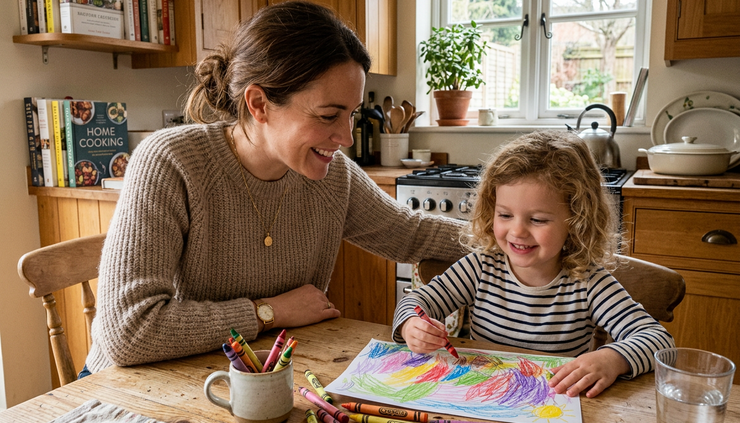
Special time is a short period of warm, child led play. Even 5 to 10 minutes can help.
During special time, the parent follows the child’s lead, notices positive behavior, and avoids teaching, correcting, or asking too many questions.
This fills the child’s attention tank in a healthy way.
A child who gets regular positive attention may not need to seek attention through tantrums as often.
Special time can sound like:
“I like how carefully you are building that tower.”
“You are working hard on that drawing.
It may feel simple, but it is a powerful parenting tool often overlooked. The hardest part is being consistent so aim small (10 min) and try to make it a routine for a minimum of 2 days a week.

Time out and reinforcement work best when used calmly
Time out can help when a child needs a brief reset after unsafe or aggressive behavior. It works best when it is calm, predictable, and not filled with anger or lectures.
Keep it simple. State the rule, guide the child to the time out spot, and avoid giving lots of attention during the process.
After time out, look for the next chance to praise appropriate behavior.
Positive reinforcement is just as important. Children need to know what to do instead.
If a child often screams when told no, teach and reward a replacement behavior:
“I can be mad and use a calm voice.”
“I can ask for help.”
“I can stomp my feet in a safe place.”
“I can take a break.”
The goal is not perfect behavior. The goal is progress.

Parenting tools make hard work pay off
Parenting is hard work. It makes sense to want tools that help your effort pay off.
Parent management training can teach skills like differential attention, planned ignoring, special time, time out, and positive reinforcement. These tools help parents respond with more confidence and help children learn better ways to handle anger.
Working with a psychologist at KPS can also help identify the function of the behavior and create a plan to reduce unwanted behaviors at home.
This post is for general information and is not a substitute for care from a qualified professional.
To get support, schedule with a KPS psychologist today 281-306-3068. A few practical tools can make daily life feel calmer for both parents and children, and some relief back into family life!


Comments